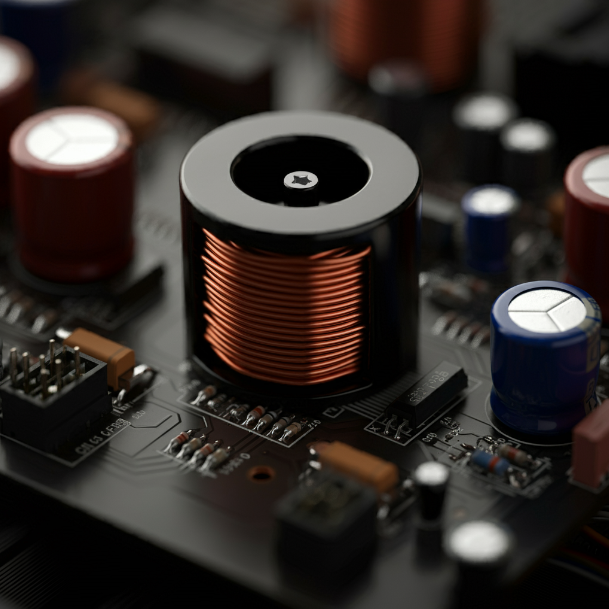
Inductors at the forefront of modern electronics
2024-07-20

Growing demand for high-efficiency inductors
The demand for high efficiency inductors is increasing in the rapidly developing electronics industry. Inductors are important components in various electronic circuits and play a vital role in energy storage, filtering, and noise suppression. With advanced technologies such as 5G, electric vehicles (EVs) and renewable energy systems, the need for more efficient and reliable inductors is greater than ever.
Technology Innovation and Development
Leading manufacturers are continually pushing the limits of inductor technology to meet the growing demand for performance. Recent innovations include the development of inductors with improved magnetic materials that offer higher efficiency and better thermal performance. There is also a significant trend towards miniaturisation of inductors, enabling them to be integrated into compact electronic devices without sacrificing performance. Advancements in manufacturing technologies have also helped in the production of inductors with higher current handling capacity and lower losses.
Market Trends and Growth Drivers
The popularity of consumer electronics, expansion of renewable energy projects, and increasing popularity of electric vehicles are driving strong growth in the inductor market. The transition to 5G technology is another key driver, as it requires inductors that can handle higher frequencies and power levels. Regions such as North America, Europe, and Asia Pacific are at the forefront of this growth, supported by significant investments in technology and infrastructure development. The demand for advanced inductors is further fuelled by the trend towards energy-efficient solutions.
Key Applications and Industry Impact
Inductors are critical in a variety of applications, including
- Consumer electronics: Providing efficient energy storage and noise suppression for smartphones, laptops, and wearable devices.
- Automotive: Enhancing power management and energy efficiency in electric and hybrid vehicles.
- Renewable Energy: Enabling power conversion and energy storage for solar panels and wind turbines.
- Telecommunications: Enabling high-frequency operation and signal integrity in 5G networks and communications equipment.
- Industrial Automation: Ensuring reliable power transmission and noise suppression for automated machinery and control systems.
- Medical: Providing precise energy control and noise reduction for diagnostic and therapeutic equipment.
Future Outlook
Looking ahead, the inductor market will continue to grow and innovate. Future advancements are expected to focus on enhanced material properties, improved miniaturisation techniques and integration of smart features for real-time performance monitoring. As electronic devices become more compact and energy efficient, inductors will play a key role in meeting these evolving needs. The continued development of renewable energy technologies and electric vehicles will also drive demand for more advanced and efficient inductors, ensuring their importance in future electronics.
Common Mode Chokes Enhance EMI Suppression in Modern Electronics
Flat transformer retrofit power electronics
Related Article
In the design field of high - frequency transformers and inductors, the introduction of an air gap in the magnetic core is a crucial yet delicate technique that requires careful trade - offs. The presence of an air gap not only significantly impacts magnetic properties but also has close relations with thermal stability and efficiency.
Air - Gap Design in High - Frequency Transformers: Trade - offs among Magnetic, Thermal, and Efficiency Aspects