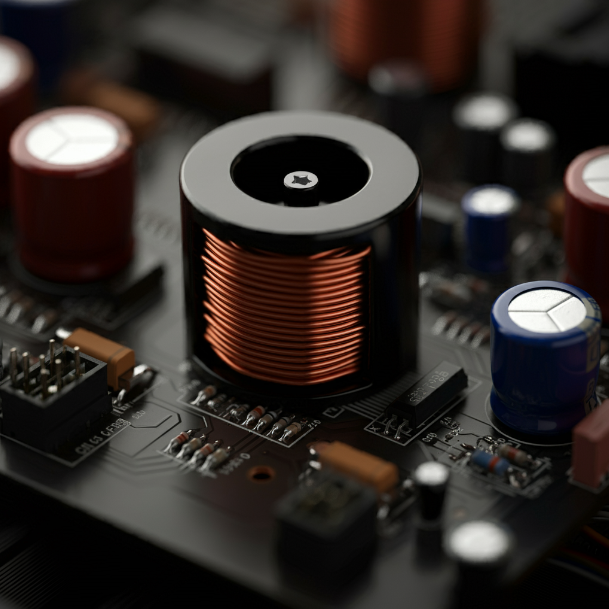
Overview of the working principle and classification of inductive coils
2024-08-09
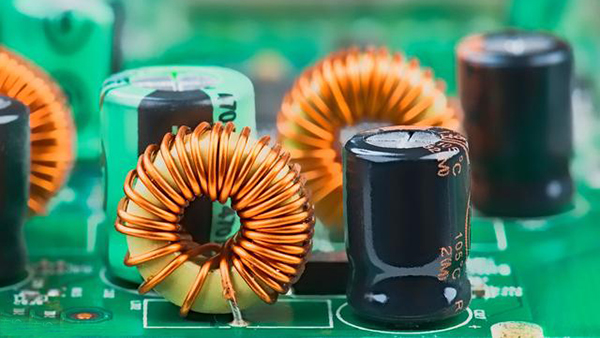
Definition of Inductor Coils
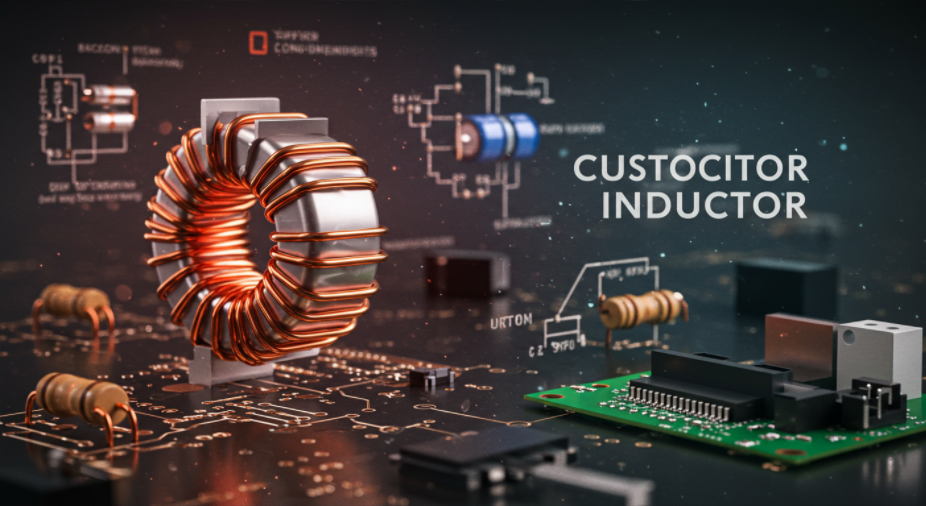
An inductor coil is composed of wire wound in loops around an insulating tube. The wires are insulated from each other, and the insulating tube can be either hollow or contain a core made of iron or magnetic powder. This is commonly referred to as an inductor, denoted by "L." The units of inductance are Henry (H), millihenry (mH), and microhenry (uH), with 1H = 10^3 mH = 10^6 uH.
Classification of Inductors
1. Based on Inductor Type
Fixed Inductor
Variable Inductor
2. Based on Magnetic Core Properties
Air-core Coil
Ferrite-core Coil
Iron-core Coil
Copper-core Coil
3. Based on Functionality
Antenna Coil
Oscillation Coil
Choke Coil
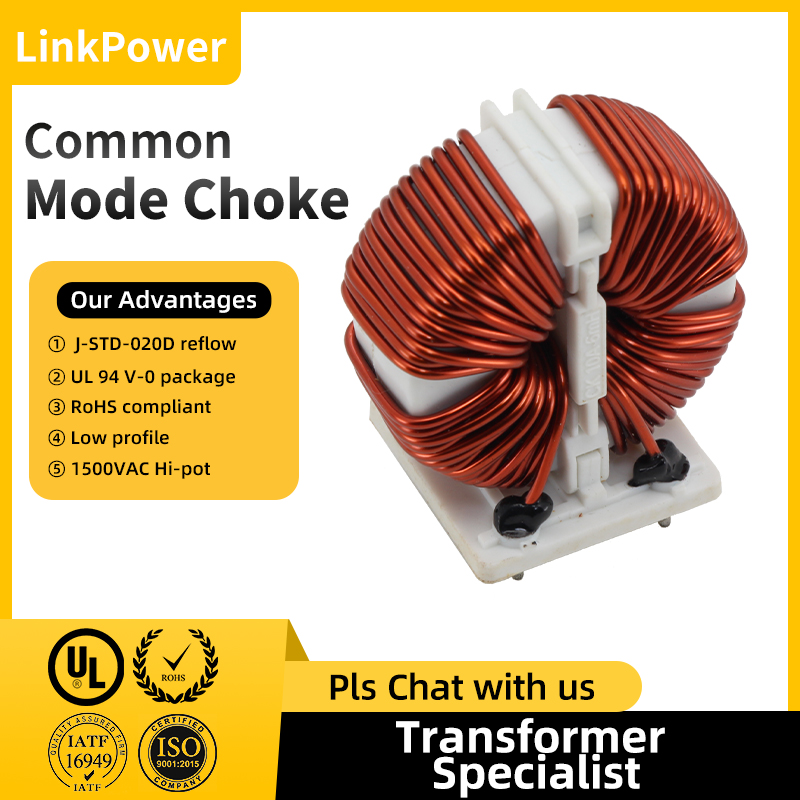
Tip: The common mode choke is essential in filtering high-frequency noise in circuits, making it a key component in modern electronics.
Trap Coil
Deflection Coil
4. Based on Winding Structure
Single-layer Coil
Multi-layer Coil
Honeycomb Coil
Common Types of Coils
1. Single-layer Coil
A single-layer coil is wound with insulated wire, loop by loop, around a paper tube or a bakelite frame. For example, the medium wave antenna coil in a transistor radio.
2. Honeycomb Coil
A coil is called a honeycomb coil when its plane is not parallel to the rotational surface but intersects at a certain angle. The number of times the wire bends back and forth per turn is referred to as the number of folds. The honeycomb winding method has the advantages of small size, low distributed capacitance, and large inductance. Honeycomb coils are typically wound using a honeycomb winder, and the more folds, the lower the distributed capacitance.
3. Ferrite Core and Iron Powder Core Coils
The inductance of a coil depends on the presence of a magnetic core. Inserting a ferrite core into an air-core coil increases the inductance and improves the quality factor (Q) of the coil.
4. Copper-core Coil
Copper-core coils are frequently used in the ultra-shortwave range. By rotating the copper core within the coil, the inductance can be easily and durably adjusted.
Tip: LP Transformer plays a vital role in reducing the size of electronic devices without sacrificing performance.
5. Color-coded Inductor
A color-coded inductor has a fixed inductance value, and its inductance is marked similarly to resistors, using color bands.
6. Choke Coil
A choke coil is a coil that limits the passage of alternating current. Choke coils are classified into high-frequency and low-frequency types.
7. Deflection Coil
Deflection coils are used as the load for the output stage of a TV's scanning circuit. They require high deflection sensitivity, uniform magnetic fields, high Q-value, small size, and low cost.
Insight: Stay updated with The Global Transformer Trend to understand how these components are evolving in the market.
For any further questions, you can always check our FAQ section to learn more about inductors and transformers.
The Evolving Role of RJ45 in Modern Networks
Link-Power Identifies and Mitigates Common Transformer Failures
Related Article
In the design field of high - frequency transformers and inductors, the introduction of an air gap in the magnetic core is a crucial yet delicate technique that requires careful trade - offs. The presence of an air gap not only significantly impacts magnetic properties but also has close relations with thermal stability and efficiency.
Air - Gap Design in High - Frequency Transformers: Trade - offs among Magnetic, Thermal, and Efficiency Aspects