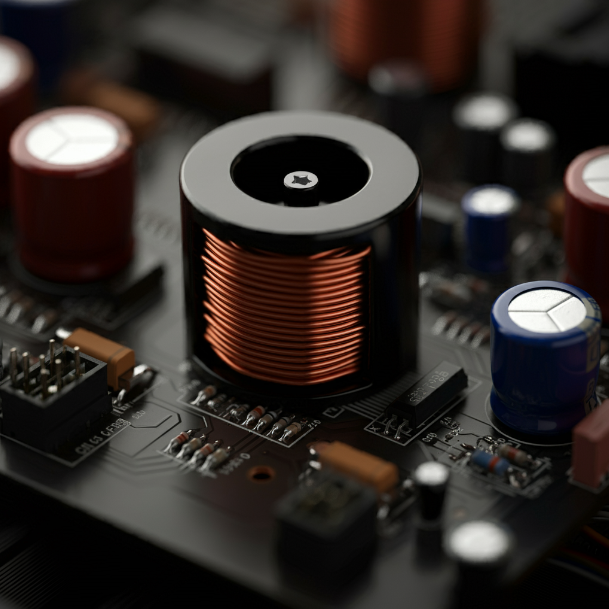
Innovative common mode choke for enhanced noise rejection
2024-07-26

Common mode chokes are essential for reducing electromagnetic interference (EMI) and improving signal integrity in electronic circuits. Recent advances in common-mode choke technology have greatly improved their noise suppression and electromagnetic compatibility (EMC). As electronic equipment becomes more complex, these improvements are critical to maintaining performance and ensuring compliance with stringent EMI regulations.
Technology Innovations and Developments
Recent innovations in common mode choke technology have focused on enhancing noise filtering and improving overall performance. Key developments include the use of advanced core materials with higher permeability, improved winding techniques and improved magnetic shielding. These advances can more effectively suppress common mode noise and reduce signal distortion. In addition, new common mode chokes are designed to accommodate higher frequencies and can be seamlessly integrated into compact electronic systems, thereby meeting the demands of modern technology.
Recent innovations in common mode choke technology have focused on enhancing noise filtering and improving overall performance. Key developments include the use of advanced core materials with higher permeability, improved winding techniques and improved magnetic shielding. These advances can more effectively suppress common mode noise and reduce signal distortion. In addition, new common mode chokes are designed to accommodate higher frequencies and can be seamlessly integrated into compact electronic systems, thereby meeting the demands of modern technology.
Market Trends and Growth Drivers
The common mode choke market is expanding rapidly, driven by increasing requirements for effective EMI suppression across a wide range of industries. The key growth drivers include the proliferation of electronic devices, growing concerns over EMI, and stringent EMC regulatory standards. Regions such as Asia Pacific, North America, and Europe are at the forefront of the market, driven by continuous technological advancements and investments in electronics manufacturing. The trend towards miniaturisation and high performance of electronic components is also contributing to the market growth.
The common mode choke market is expanding rapidly, driven by increasing requirements for effective EMI suppression across a wide range of industries. The key growth drivers include the proliferation of electronic devices, growing concerns over EMI, and stringent EMC regulatory standards. Regions such as Asia Pacific, North America, and Europe are at the forefront of the market, driven by continuous technological advancements and investments in electronics manufacturing. The trend towards miniaturisation and high performance of electronic components is also contributing to the market growth.
Key Applications and Industry Impact
Common mode chokes are critical in a variety of applications, including
Common mode chokes are critical in a variety of applications, including
- Consumer Electronics: Enhance noise rejection in devices such as smartphones, laptops, and tablets.
- Industrial Automation: Ensure reliable operation of machinery and control systems by minimising electromagnetic interference.
- Telecommunications: Improving signal quality and reducing interference in communications networks.
- Automotive electronics: Supports electromagnetic compatibility in advanced automotive systems.
- Medical devices: Ensure the performance and safety of sensitive medical devices by minimising electromagnetic interference.
Future Outlook
The future of common mode chokes looks promising as technologies aimed at improving noise suppression, efficiency and integration continue to advance. Innovations in materials, design and manufacturing processes promise more efficient and compact solutions. As the demand for high-performance, high-reliability electronic systems grows, common mode chokes will continue to be a key component in ensuring effective EMC and EMI reduction in a variety of applications.
Advances in PoE Transformer Technology Improve Network Efficiency
New Trends in xDSL Transformers for Enhanced Broadband Connectivity
Related Article
In the design field of high - frequency transformers and inductors, the introduction of an air gap in the magnetic core is a crucial yet delicate technique that requires careful trade - offs. The presence of an air gap not only significantly impacts magnetic properties but also has close relations with thermal stability and efficiency.
Air - Gap Design in High - Frequency Transformers: Trade - offs among Magnetic, Thermal, and Efficiency Aspects