
Common Mode Inductors: Enhancing EMI Suppression in Modern Electronic Equipment
2024-07-03

What is a common mode inductor?
Common mode inductance refers to the use of inductors to filter out common mode noise - an unwanted electromagnetic interference that affects multiple signal lines in the same way. By effectively reducing this noise, common mode inductors help maintain signal integrity and prevent interference with other electronic components and systems.
Key Benefits of EMI Suppression
Enhanced Signal Integrity: Common mode inductors are critical to maintaining the quality of signal transmission by filtering out unwanted noise. This makes data communications clearer and more reliable, which is critical in high-speed and high-frequency applications.
Standards compliance: Many industries, particularly telecommunications, automotive and consumer electronics, must comply with stringent EMI regulations. Common mode inductors help devices meet these regulations and ensure that they operate within the permissible interference limits.
Improved device performance: By minimising EMI, common mode inductors improve the overall performance of electronic devices. This results in more stable and efficient operation, which is especially important for sensitive applications such as medical equipment and precision instruments.
Cross-Industry Applications
Common mode inductors are used in a wide range of applications, including
Telecommunications: Ensuring clear and stable signal transmission in network equipment and broadband modems.
Automotive: Reducing electromagnetic interference in electric vehicles (EVs) and automotive electronics to ensure reliable operation of critical systems.
Consumer Electronics: Improve the performance of devices such as smartphones, laptops and home appliances by minimising interference.
Industrial equipment: Improve the reliability of control systems and machinery in manufacturing and automation environments.
Technological Advances
Automotive: Reducing electromagnetic interference in electric vehicles (EVs) and automotive electronics to ensure reliable operation of critical systems.
Consumer Electronics: Improve the performance of devices such as smartphones, laptops and home appliances by minimising interference.
Industrial equipment: Improve the reliability of control systems and machinery in manufacturing and automation environments.
Technological Advances
Advances in materials science and manufacturing technology are driving the development of more efficient and compact common mode inductors. These innovations include
High permeability cores: Using high permeability materials to increase inductance and improve filtering efficiency.
Miniaturisation: Developing smaller inductors for integration into compact electronic designs without compromising performance.
Thermal management: Enhancing heat dissipation to ensure that inductors operate efficiently under high power conditions.
Future Trends
Miniaturisation: Developing smaller inductors for integration into compact electronic designs without compromising performance.
Thermal management: Enhancing heat dissipation to ensure that inductors operate efficiently under high power conditions.
Future Trends
Looking ahead, demand for common mode inductors is expected to grow as electronic devices become more sophisticated and interconnected. Future trends include
Integration with emerging technologies: Common mode inductors are used in next-generation technologies such as 5G, IoT and self-driving cars.
Smart inductors: Combining smart materials and adaptive features to dynamically adjust filtering capabilities based on operating conditions.
Conclusion
Smart inductors: Combining smart materials and adaptive features to dynamically adjust filtering capabilities based on operating conditions.
Conclusion
Common mode inductors are an important part of modern electronics, offering significant advantages in terms of EMI suppression, signal integrity and device performance. As technology continues to evolve, advances in common mode inductors will play a critical role in supporting the development of more reliable, efficient and compliant electronic systems.
Translated with www.DeepL.com/Translator (free version)
Inductors Lead the Way in Advanced EMI Suppression for Modern Electronics
Broadband Modem Transformers: Pioneering Connectivity Enhancements
Related Article
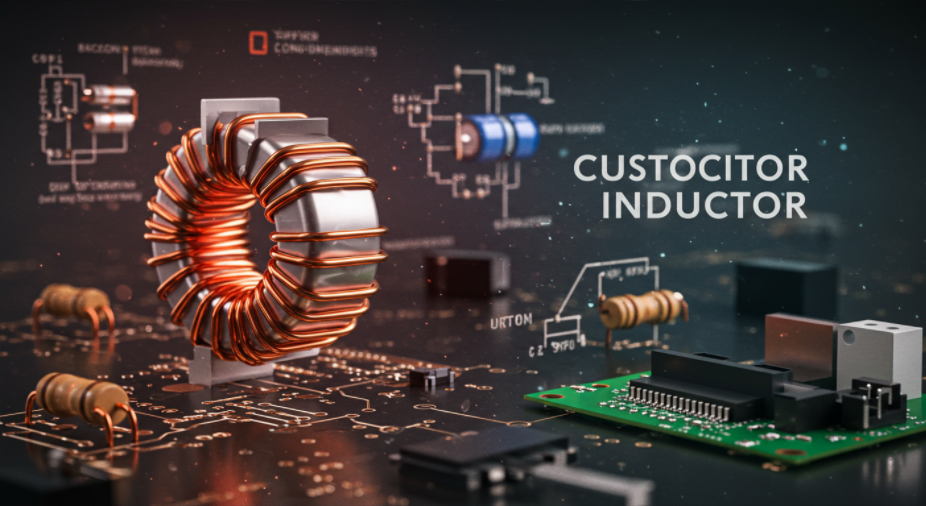
In the design field of high - frequency transformers and inductors, the introduction of an air gap in the magnetic core is a crucial yet delicate technique that requires careful trade - offs. The presence of an air gap not only significantly impacts magnetic properties but also has close relations with thermal stability and efficiency.
Air - Gap Design in High - Frequency Transformers: Trade - offs among Magnetic, Thermal, and Efficiency Aspects