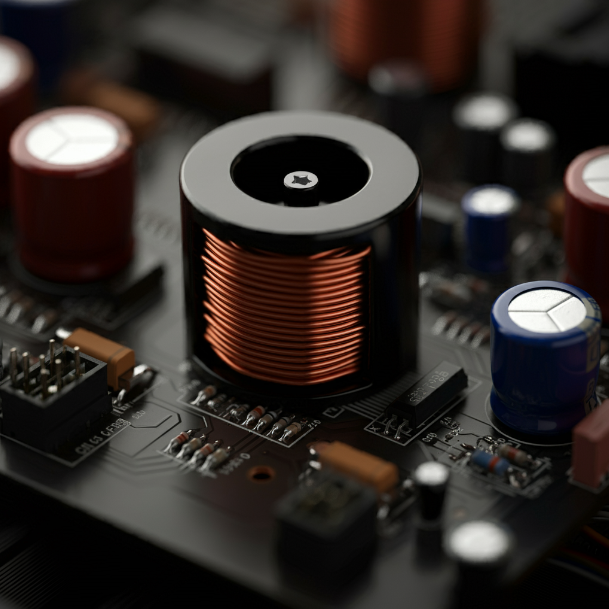
Ethernet transformers: Driving the future of network connectivity
2024-06-28

What is an Ethernet Transformer?
An Ethernet transformer is a key component used in Ethernet networks to provide isolation and signal conditioning. It is the interface between the Ethernet transceiver and the physical network cabling, ensuring compliance with IEEE standards and protecting network equipment from electrical interference and surges. Ethernet transformers are critical for both Fast Ethernet (100 Mbps) and Gigabit Ethernet (1000 Mbps) applications.
Technological Advances
Recent technological advances have greatly improved the performance and efficiency of Ethernet transformers:
Enhanced Signal Integrity: Modern Ethernet transformers are designed to minimise signal loss and electromagnetic interference (EMI). Advanced manufacturing techniques and materials enable transformers to provide cleaner, more reliable data transmission even over long distances.
Miniaturisation: As electronic devices become more compact, Ethernet transformers are shrinking in size. This miniaturisation is critical to integrating these components into small devices and dense network equipment without compromising performance.
Power Efficiency: Reducing power consumption is a top priority for modern networking components. Ethernet transformers are now designed to minimise energy loss, helping to reduce overall power usage in data centres and other power-intensive environments.
Rugged and Reliable: Ethernet transformers can now withstand harsh environmental conditions such as extreme temperatures and humidity. This ruggedness ensures reliable performance in industrial and outdoor applications.
Support for Higher Data Rates: As the need for faster data transfer continues to grow, Ethernet transformers are evolving to support higher data rates, including 10 Gigabit Ethernet and beyond. These advancements ensure that transformers will be able to meet the requirements of future network standards.
Market Impact and Trends
The Ethernet transformer market is experiencing significant growth driven by several key trends:
Expansion of data centres: The rise of cloud computing and big data analytics is driving the expansion of data centres. Ethernet transformers are essential to ensure reliable and efficient network connectivity in these facilities, support high-speed data transfer, and reduce downtime.
Proliferation of IoT devices: From smart home appliances to industrial sensors, the Internet of Things (IoT) is driving the exponential growth of connected devices. Reliable Ethernet connectivity is critical for these devices, driving demand for high-quality transformers.
Advances in 5G and Edge Computing: The rollout of 5G networks and the growth of edge computing require advanced networking solutions to handle increased data traffic and reduce latency. Ethernet transformers play a crucial role in supporting these next-generation technologies.
Industrial Automation: In industrial environments, robust and reliable network connectivity is critical for automation and control systems. Ethernet transformers ensure stable, interference-free connections to support the complex requirements of industrial automation.
Consumer Networking: Ethernet transformers are becoming increasingly important in consumer networking equipment as consumers demand faster, more reliable home networks for streaming media, gaming and remote work.
Future Outlook
The future outlook for Ethernet transformers is promising, with ongoing innovation expected to further enhance their functionality. R&D efforts are likely to focus on supporting higher data rates, improving energy efficiency, and continuing the trend toward miniaturisation. Ethernet transformers will remain a key technology as the global demand for reliable and high-speed network connectivity continues to grow.
In short, Ethernet transformers are at the heart of modern networks, enabling robust and efficient Ethernet connectivity in a variety of applications. From data centres to smart homes, these transformers ensure the reliability and performance of the network infrastructure. As technology continues to advance, Ethernet transformers will play a key role in shaping the future of connectivity.
Gigabit Ethernet Transformers: Enhancing the Performance of Future Networks
Ethernet PHY Transformers: Revolutionising Network Connectivity
Related Article
In the design field of high - frequency transformers and inductors, the introduction of an air gap in the magnetic core is a crucial yet delicate technique that requires careful trade - offs. The presence of an air gap not only significantly impacts magnetic properties but also has close relations with thermal stability and efficiency.
Air - Gap Design in High - Frequency Transformers: Trade - offs among Magnetic, Thermal, and Efficiency Aspects