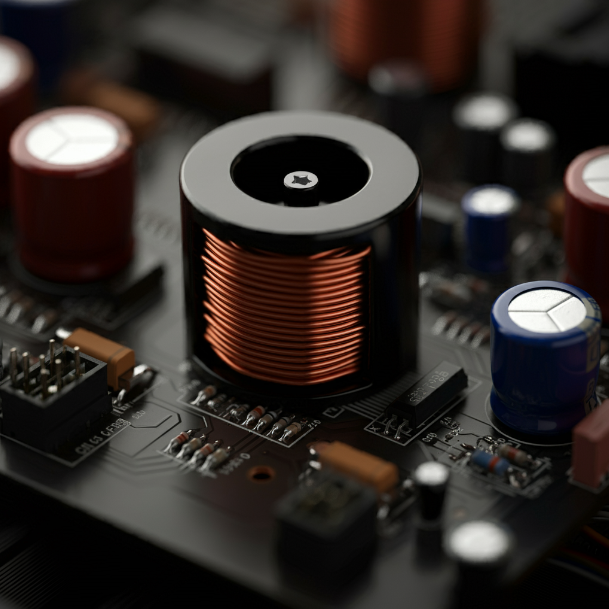
Advances in coil inductors increase efficiency of electronic products
2024-07-26

Coil inductor are fundamental components in electronic circuits and are essential for energy storage, filtering and signal processing. Recent advances in coil inductor technology have improved their effiency, miniaturisation and overall performance, enablin them to be used in ad wide range of modern electronic devicse. As electronic technology continues to evolve, the role of coil inductors in maintaining high performance and reliability is becoming increasingly important.
Technology I nnovations and Develpments
Recent innovations in coil inductor technology have focused on improving performance metrics such as inductance stability, frequency response and thermal management. These advances include the use of high quality magnetic materials, improved winding techniques and advanced core designs. These developments have resulted in inductors with higher efficiency, smaller size and higher reliability. In addition, the integration of coil inductors into compact, multifunctional designs is becoming more common, supporting the growing demand for smaller, more efficient electronic devices.
Market Trends and Growth Drivers
The coil inductor market is experiencing strong growth due to the increasing demand for efficient energy management and signal processing in various electronic applications. Key market drivers include expansion of consumer electronics, rise in electric vehicles, and popularity of IoT devices. Regions such as Asia Pacific, North America, and Europe are leading the market, driven by technological advancements and substantial investments in electronics manufacturing. The trend towards miniaturisation and high performance of electronic devices is also driving the growth of the market.
The coil inductor market is experiencing strong growth due to the increasing demand for efficient energy management and signal processing in various electronic applications. Key market drivers include expansion of consumer electronics, rise in electric vehicles, and popularity of IoT devices. Regions such as Asia Pacific, North America, and Europe are leading the market, driven by technological advancements and substantial investments in electronics manufacturing. The trend towards miniaturisation and high performance of electronic devices is also driving the growth of the market.
Major Applications and Industry Impact
Coil inductors are vital in a variety of applications, including
Coil inductors are vital in a variety of applications, including
Consumer Electronics: To enhance the performance of devices such as smartphones, tablets, and laptops.
Automotive: To support power management and signal processing in electric and hybrid vehicles.
Industrial: Improving the efficiency and reliability of machinery and control systems.
Telecommunications: Ensure efficient signal processing for network equipment and communications infrastructure.
Renewable Energy: Facilitating power conversion and management for solar and wind energy systems.
Automotive: To support power management and signal processing in electric and hybrid vehicles.
Industrial: Improving the efficiency and reliability of machinery and control systems.
Telecommunications: Ensure efficient signal processing for network equipment and communications infrastructure.
Renewable Energy: Facilitating power conversion and management for solar and wind energy systems.
Future Outlook
The coil inductor market is promising, with ongoing research aimed at developing inductors with higher performance, smaller size and higher efficiency. Anticipated advances include innovations in core materials, winding technology and integration capabilities. As the demand for advanced electronic devices continues to grow, coil inductors will remain a key component in supporting high-performance, high-reliability electronic systems.
Advancements in Common Mode Chokes Enhancing EMC Solutions
Transforming Connectivity: Innovations in PoE Transformers
Related Article
In the design field of high - frequency transformers and inductors, the introduction of an air gap in the magnetic core is a crucial yet delicate technique that requires careful trade - offs. The presence of an air gap not only significantly impacts magnetic properties but also has close relations with thermal stability and efficiency.
Air - Gap Design in High - Frequency Transformers: Trade - offs among Magnetic, Thermal, and Efficiency Aspects