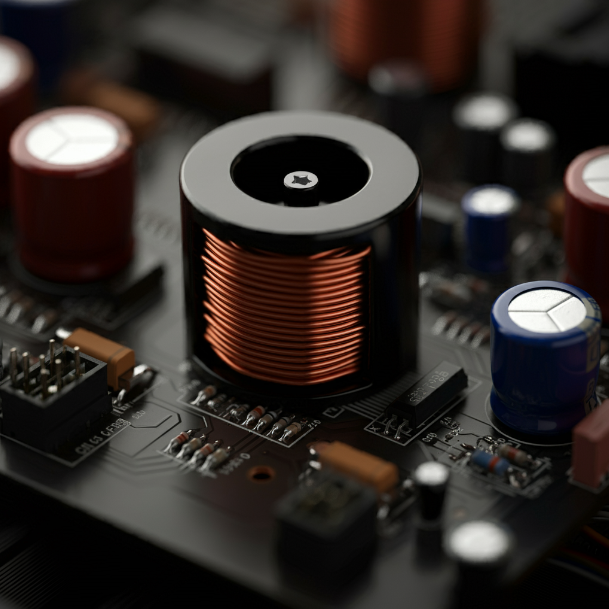
Inductors: A key player in modern electronic circuits
2024-07-04
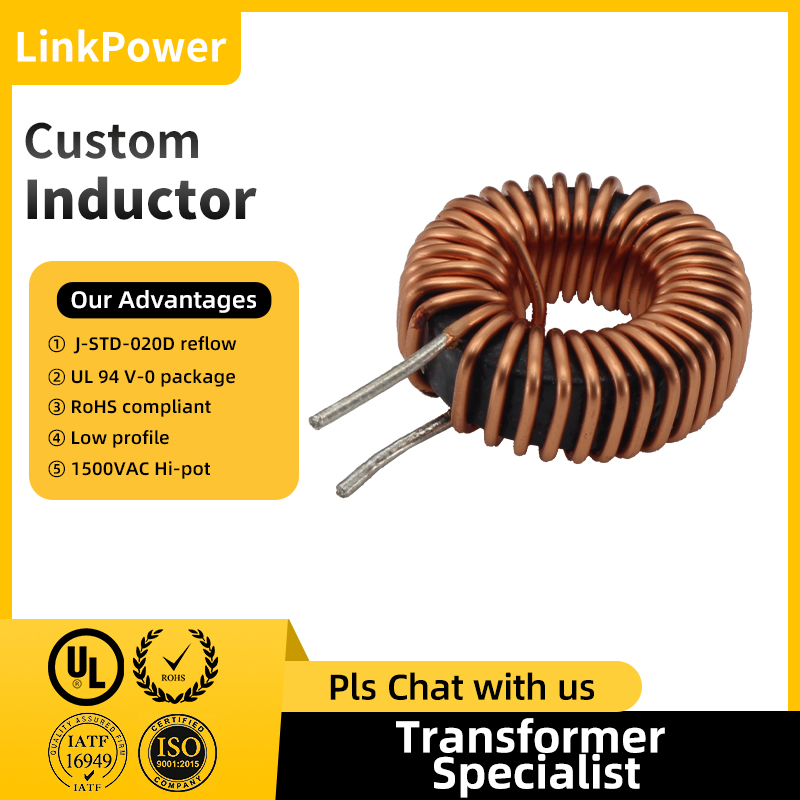
The Role of Inductors
Inductors are often thought of as coils and are used for a variety of functions in electronic circuits:
Energy storage: Inductors store energy in a magnetic field and release it when needed, making them essential in power supply circuits.
Filtering: In signal processing applications, they filter out unwanted noise and interference to ensure signal integrity.
Current Stabilisation: Inductors help maintain a steady flow of current, which is essential for the reliable operation of electronic equipment.
Impedance Matching: In radio frequency (RF) circuits, inductors are used for impedance matching to maximise power transfer and minimise reflections.
Filtering: In signal processing applications, they filter out unwanted noise and interference to ensure signal integrity.
Current Stabilisation: Inductors help maintain a steady flow of current, which is essential for the reliable operation of electronic equipment.
Impedance Matching: In radio frequency (RF) circuits, inductors are used for impedance matching to maximise power transfer and minimise reflections.
Advances in Inductor Technology
Advanced Core Materials: The development of new magnetic materials, such as ferrite and nanocrystalline alloys, has greatly improved inductor performance. These materials offer higher permeability, lower core losses, and better thermal stability, which improves the efficiency and reliability of inductors in a variety of applications.
Miniaturisation: Advances in manufacturing technology have resulted in smaller and more compact inductors. This miniaturisation is critical for integrating inductors into modern electronic devices with space constraints, such as smartphones, tablets and wearable technology.
High Frequency Performance: Innovations in inductor design, such as multilayer inductors and planar inductors, have improved the high frequency performance of inductors. These designs reduce parasitic capacitance and resistance, making inductors more efficient in high-speed and high-frequency applications.
Integrated Inductors: The integration of inductors into semiconductor chips (inductors on chip) is becoming more common, especially in power management and RF circuits. This integration reduces parasitic losses, improves performance, and saves space on printed circuit boards (PCBs).
Cross-Industry Applications
Inductors are used in a wide range of industries:
Power Supplies: In power supply circuits, inductors are used in DC-DC converters and AC-DC power supplies to smooth out voltage and current fluctuations.
Automotive Electronics: Inductors play an important role in electric vehicles (EVs) and hybrids, where they are used in power management and motor control circuits.
Consumer Electronics: Inductors are used in a variety of functions from smartphones to laptops, including power conditioning, signal filtering and antenna tuning.
Telecommunications: Inductors are vital in RF circuits, where they are used in filters, oscillators and impedance matching networks to ensure the reliability of communication signals.
Industrial Automation: Inductors are used in motor control systems, power supplies and signal processing circuits in industrial automation applications.
Automotive Electronics: Inductors play an important role in electric vehicles (EVs) and hybrids, where they are used in power management and motor control circuits.
Consumer Electronics: Inductors are used in a variety of functions from smartphones to laptops, including power conditioning, signal filtering and antenna tuning.
Telecommunications: Inductors are vital in RF circuits, where they are used in filters, oscillators and impedance matching networks to ensure the reliability of communication signals.
Industrial Automation: Inductors are used in motor control systems, power supplies and signal processing circuits in industrial automation applications.
Future trends in inductor technology
Future trends in inductor technology are mainly in the following areas:
High-performance materials: Ongoing research is aimed at developing new magnetic materials with higher performance characteristics, such as greater permeability, lower losses and better thermal stability.
Further miniaturisation: Continuing advances in manufacturing technology will enable inductors to be produced on a smaller scale, thus facilitating their integration into increasingly compact electronic devices.
Smart inductors: Integration with digital monitoring and control systems will enable real-time diagnostics and adaptive performance optimisation to improve the reliability and efficiency of electronic circuits.
Sustainable manufacturing: Efforts to develop environmentally friendly materials and manufacturing processes will reduce the environmental impact of inductor production and disposal.
Further miniaturisation: Continuing advances in manufacturing technology will enable inductors to be produced on a smaller scale, thus facilitating their integration into increasingly compact electronic devices.
Smart inductors: Integration with digital monitoring and control systems will enable real-time diagnostics and adaptive performance optimisation to improve the reliability and efficiency of electronic circuits.
Sustainable manufacturing: Efforts to develop environmentally friendly materials and manufacturing processes will reduce the environmental impact of inductor production and disposal.
Conclusion
Inductors are important components in modern electronic circuits for energy storage, filtering and stabilisation. Advances in core materials, miniaturisation, high-frequency performance and integration have driven improvements in inductor efficiency and reliability.
Power transformers: the backbone of modern power infrastructure
Push-pull transformers: Improving efficiency and reliability in power conversion
Related Article
In the design field of high - frequency transformers and inductors, the introduction of an air gap in the magnetic core is a crucial yet delicate technique that requires careful trade - offs. The presence of an air gap not only significantly impacts magnetic properties but also has close relations with thermal stability and efficiency.
Air - Gap Design in High - Frequency Transformers: Trade - offs among Magnetic, Thermal, and Efficiency Aspects