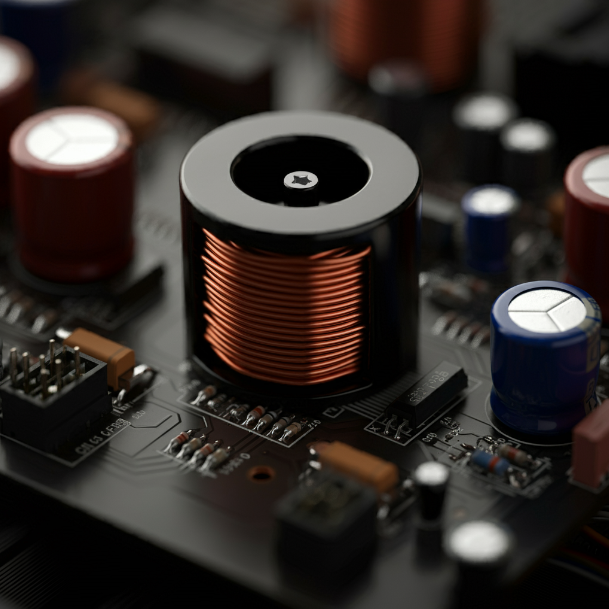
Regulated Power Supply Transformers Improve Stability and Efficiency
2024-06-21

Regulated Power Transformers Overview
Regulated power transformers are specialised transformers designed to provide a stable, accurate voltage output independent of fluctuations in input voltage or load conditions. They employ advanced voltage regulation mechanisms (such as feedback control circuits) to maintain a stable output voltage within tight tolerances. This capability makes them indispensable in applications where voltage stability is critical.
Key Features and Benefits
Voltage Stability: Regulated power transformers ensure a stable and reliable voltage output, which is critical for sensitive electronic equipment, communication systems and industrial machinery. Precise regulation minimises voltage variations, protecting equipment from damage and ensuring consistent performance.
High efficiency: These transformers feature a highly efficient design that optimises energy transfer and minimises power loss during voltage conversion. This efficiency helps reduce energy consumption and operating costs across industries.
Adaptable: Regulated power transformers can be adapted to different voltage and current requirements, supporting a wide range of applications from telecom and data centres to renewable energy installations. Their flexibility enables customisation to meet specific operational needs.
Safe and Reliable: Regulated power transformers are robustly insulated, protected and comply with international safety standards, thus ensuring safety during installation, operation and maintenance. They are designed for long-term reliable performance in demanding environments.
Applications and impact
Telecoms: In telecoms networks, regulated power transformers provide a stable voltage to critical equipment such as routers, switches and base stations. A stable power supply ensures uninterrupted communications service and network reliability.
Data Centres: Data centres rely on regulated power transformers to provide accurate voltages for servers, storage systems and network equipment. Stable voltage supports efficient data processing and storage operations, thus improving the overall performance of the facility.
Renewable Energy Systems: Regulated power transformers play a vital role in renewable energy installations such as solar and wind farms. They help in the conversion and distribution of clean energy while maintaining grid stability and efficiency.
Medical and Laboratory Equipment: In medical facilities and research laboratories, regulated power transformers power sensitive equipment such as MRI machines, laboratory analysers and precision instruments. Regulated voltage ensures accurate readings and reliable operation of critical medical and scientific processes.
Industry Trends and Future Outlook
The demand for regulated power transformers is expected to grow as industries increasingly focus on reliability, efficiency, and sustainability in power management. Future innovations in transformer technology will focus on enhancing voltage regulation, improving energy efficiency, and integrating smart grid features.
In addition, advances in digital control systems and IoT (Internet of Things) integration will enable real-time monitoring and optimisation of power distribution networks. These developments will contribute to a more adaptable and resilient power infrastructure that will meet the evolving needs of modern industry.
Conclusion
Regulated power transformers are an important component in ensuring a stable and efficient power supply in critical areas such as telecoms, data centres, healthcare and renewable energy. They provide precise voltage regulation and reliable performance to support business continuity, energy efficiency and technological advancement. As industries continue to innovate and expand, regulated power transformers will remain at the forefront of advancing the reliability and sustainability of the world's power infrastructure.
Advances in POE Efficient Transformers: Paving the Way for Greener, More Efficient Power Solutions
480V to 240V Step-Down Transformers Promote Efficient Power Distribution
Related Article
In the design field of high - frequency transformers and inductors, the introduction of an air gap in the magnetic core is a crucial yet delicate technique that requires careful trade - offs. The presence of an air gap not only significantly impacts magnetic properties but also has close relations with thermal stability and efficiency.
Air - Gap Design in High - Frequency Transformers: Trade - offs among Magnetic, Thermal, and Efficiency Aspects