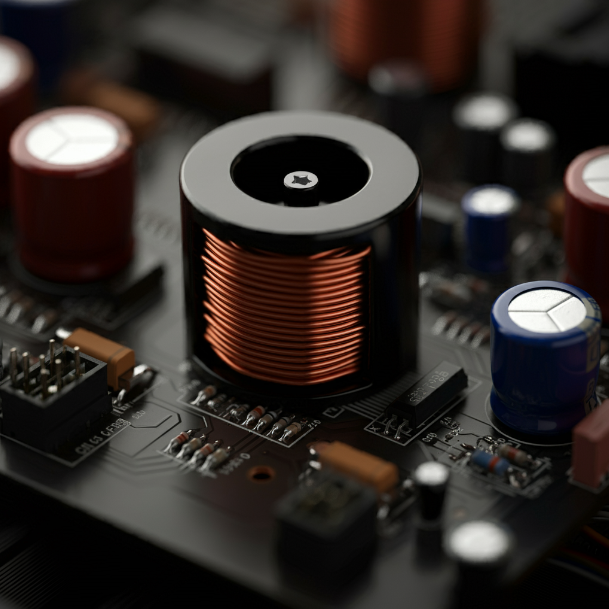
Innovations in SMPS transformer technology
2024-07-09

The Role of SMPS Transformers
SMPS transformers are used in a wide range of applications, including consumer electronics, industrial equipment and renewable energy systems. They operate at high frequencies and are smaller and more efficient than conventional transformers.
Key advances in SMPS transformer technology
High Frequency Operation:
SMPS transformers are designed to operate at high frequencies, typically between 20 kHz and millions of hertz. This high-frequency operation reduces the size of the transformer and associated components, resulting in a more compact power supply design.
Advanced core materials:
Advanced core materials:
The use of advanced magnetic materials such as ferrite and nanocrystalline alloys improves the performance of SMPS transformers. These materials feature high permeability and low core losses, resulting in improved efficiency and thermal management.
Improved winding technology:
Improved winding technology:
Innovations in winding technology, such as staggered windings and flat transformer designs, have reduced leakage inductance and improved coupling efficiency. These improvements result in better voltage regulation and lower electromagnetic interference (EMI).
Enhanced cooling solutions:
Enhanced cooling solutions:
Efficient cooling is critical to maintaining the performance and longevity of SMPS transformers. Advanced cooling methods, including forced air cooling and liquid cooling, are integrated into the transformer design to effectively manage heat dissipation.
Intelligent monitoring and control:
Intelligent monitoring and control:
Digital monitoring and control systems are used to provide real-time performance tracking and predictive maintenance of SMPS transformers. These intelligent systems help optimise efficiency and identify potential problems before they occur.
Applications and Impact
SMPS transformers are essential in a wide range of applications:
Consumer electronics: From smartphones to laptops, SMPS transformers ensure efficient power conversion, contributing to the miniaturisation and lightweight design of modern electronic devices.
Industrial equipment: Highly efficient SMPS transformers support the reliable operation of industrial machinery, reducing energy consumption and operating costs.
Renewable energies: In solar inverters and wind turbine systems, SMPS transformers facilitate the efficient conversion and regulation of power and improve the overall performance of renewable energy installations.
Future trends
The future of SMPS transformer technology lies in continuous innovation and integration with emerging technologies:
Gallium Nitride and Silicon Carbide Semiconductors: The use of Gallium Nitride (GaN) and Silicon Carbide (SiC) semiconductors in SMPS designs is expected to further increase efficiency and reduce size.
Wireless Power Transfer: Advances in wireless power transfer technology are driving the development of SMPS transformers capable of efficient wireless energy conversion.
Sustainability: A focus on environmentally friendly materials and manufacturing processes will drive the development of sustainable SMPS transformer solutions.
Summary
Advances in SMPS transformer technology are critical to improving the efficiency, size and performance of modern power supplies. With continued innovation in materials, design and digital integration, SMPS transformers will play a key role in the future of power electronics across a wide range of industries.
Advances in Inverter Transformer Technology
Improving transformer efficiency for sustainable energy solutions
Related Article
In the design field of high - frequency transformers and inductors, the introduction of an air gap in the magnetic core is a crucial yet delicate technique that requires careful trade - offs. The presence of an air gap not only significantly impacts magnetic properties but also has close relations with thermal stability and efficiency.
Air - Gap Design in High - Frequency Transformers: Trade - offs among Magnetic, Thermal, and Efficiency Aspects