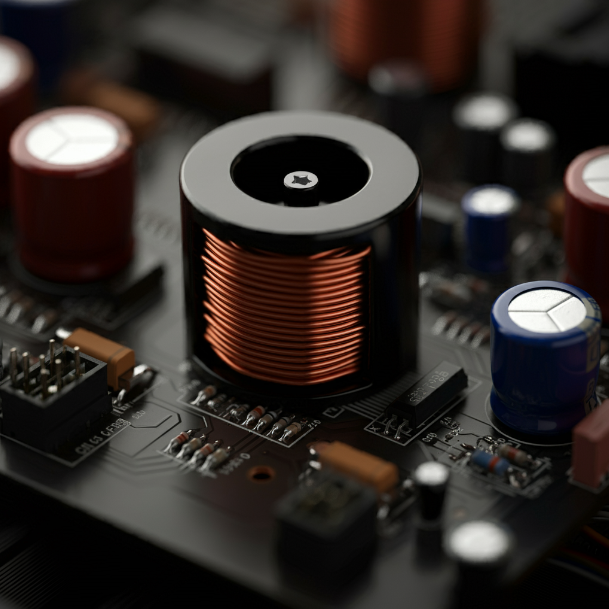
Surface Mount Technology Transformers Revolutionise Power Solutions
2024-06-26

The Rise of the SMT Transformer
In contrast to traditional through-hole components, surface mount technology transformers can be mounted directly on the surface of a printed circuit board (PCB). This allows for greater flexibility in design and assembly, resulting in more compact and efficient electronic devices.SMT transformers are particularly suitable for applications where space, weight and performance are critical.
Key advantages and innovations
SMT transformers offer several key advantages over conventional transformers:
Compact size: SMT transformers have a smaller footprint, resulting in more design flexibility and the development of more compact electronic devices.
Improved Performance: Advanced materials and manufacturing techniques improve the electrical performance of SMT transformers, resulting in higher efficiency and lower power loss.
Automated Assembly: SMT components are compatible with automated assembly processes, reducing manufacturing costs and increasing productivity.
Higher Reliability: Surface mount design provides better mechanical stability and resistance to vibration and thermal cycling.
Improved Performance: Advanced materials and manufacturing techniques improve the electrical performance of SMT transformers, resulting in higher efficiency and lower power loss.
Automated Assembly: SMT components are compatible with automated assembly processes, reducing manufacturing costs and increasing productivity.
Higher Reliability: Surface mount design provides better mechanical stability and resistance to vibration and thermal cycling.
Cross-Industry Applications
The use of SMT transformers is expanding across a wide range of industries due to the need for smaller, more efficient power solutions. Key application areas include
Consumer electronics: Smartphones, tablets and wearable devices benefit from the compact size and high efficiency of SMT transformers.
Telecommunications: Networking equipment such as routers and switches use SMT transformers to improve power management and performance.
Automotive: The automotive industry is increasingly using SMT transformers in electric vehicles (EVs) and advanced driver assistance systems (ADAS) to improve power efficiency and reliability.
Medical: SMT transformers are used in medical devices to enable compact, reliable and efficient power solutions.
Telecommunications: Networking equipment such as routers and switches use SMT transformers to improve power management and performance.
Automotive: The automotive industry is increasingly using SMT transformers in electric vehicles (EVs) and advanced driver assistance systems (ADAS) to improve power efficiency and reliability.
Medical: SMT transformers are used in medical devices to enable compact, reliable and efficient power solutions.
Market Growth and Future Trends
The global SMT transformer market is expected to grow significantly over the next few years, driven by advances in electronic device design and increased demand for miniaturisation.Future trends in SMT transformers include the following:
Higher Power Density: Current R&D efforts are focused on increasing the power density of SMT transformers so that they can handle higher power levels in smaller packages.
Integration with advanced materials: The use of advanced magnetic materials and innovative core designs is improving the performance and efficiency of SMT transformers.
IoT and Edge Computing: The proliferation of IoT devices and the rise of edge computing are driving the need for compact and efficient power solutions, further fuelling the demand for SMT transformers.
Sustainability: The electronics industry is increasingly focusing on sustainability, and SMT transformers are designed with eco-friendly materials and processes to minimise the impact on the environment.
Integration with advanced materials: The use of advanced magnetic materials and innovative core designs is improving the performance and efficiency of SMT transformers.
IoT and Edge Computing: The proliferation of IoT devices and the rise of edge computing are driving the need for compact and efficient power solutions, further fuelling the demand for SMT transformers.
Sustainability: The electronics industry is increasingly focusing on sustainability, and SMT transformers are designed with eco-friendly materials and processes to minimise the impact on the environment.
Conclusion
Surface mount technology transformers are at the forefront of the development of power solutions, offering significant advantages in terms of size, performance and manufacturing efficiency. As industries continue to push the limits of miniaturisation and efficiency, SMT transformers will play a key role in the development of the next generation of electronic devices.
Continued advances in SMT transformer technology are expected to provide higher levels of performance and reliability to meet the growing demands of modern electronic applications, and the ability of SMT transformers to meet the needs of a wide range of industries will revolutionise the way future power solutions are designed and implemented.
Compact Design SMT Transformers Revolutionise Power Solutions
The Growing Need for High Speed RJ45 Cables in Modern Networks
Related Article
In the design field of high - frequency transformers and inductors, the introduction of an air gap in the magnetic core is a crucial yet delicate technique that requires careful trade - offs. The presence of an air gap not only significantly impacts magnetic properties but also has close relations with thermal stability and efficiency.
Air - Gap Design in High - Frequency Transformers: Trade - offs among Magnetic, Thermal, and Efficiency Aspects