
Flat transformer retrofit power electronics
2024-07-20

Growing demand for compact and efficient power solutions
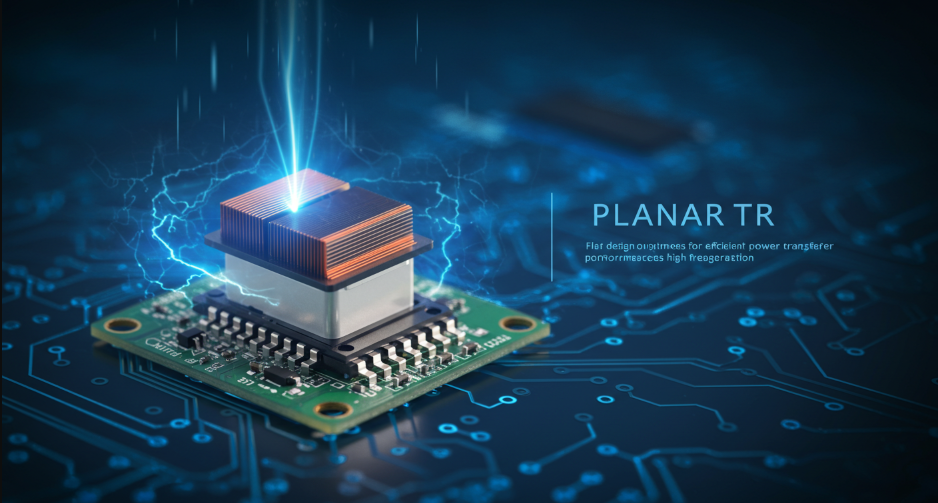
Planar transformers are gaining prominence in the power electronics industry as the demand for compact and efficient power solutions continues to grow. Known for their small form factor and high efficiency, these transformers are critical in applications where space and performance are critical. Recent technological advances have fuelled the use of planar transformers in a number of industries, including telecoms, automotive and renewable energy.
Technological innovations and developments
Leading manufacturers are innovating flat transformer technology to improve performance and reliability. Recent developments include the use of advanced materials and manufacturing techniques to improve thermal management and reduce energy loss. Planar transformers are designed with flat windings for better heat dissipation and higher power density than traditional wire-wound transformers. In addition, advances in core materials and precision engineering techniques enable planar transformers to operate at higher frequencies, making them ideal for modern power electronics applications.
Market Trends and Growth Drivers
The planar transformer market is experiencing strong growth, driven by increasing demand for high-efficiency power conversion and miniaturised electronic devices. The proliferation of electric vehicles (EVs), 5G communications, and renewable energy systems is creating new opportunities for planar transformers. Regions such as North America, Europe, and Asia Pacific are leading the market, supported by significant investments in advanced manufacturing technologies and power infrastructure. The trend towards more compact and energy-efficient power supplies is also driving the adoption of planar transformers in consumer electronics and industrial automation.
Key Applications and Industry Impact
Planar transformers are critical in various applications, including
- Telecommunications: Providing efficient power conversion for base stations, data centres and network equipment.
- Automotive: Enhancing power management for electric vehicles and hybrid systems.
- Renewable Energy: Supporting power conversion in solar inverters and wind turbine systems.
- Industrial Automation: Compact and efficient power supplies for automated machinery and control systems.
- Consumer Electronics: Miniaturised power solutions for laptops, smartphones and portable devices.
- Medical devices: Ensuring reliable and efficient power conversion for diagnostic and therapeutic equipment.
Future Outlook
Looking ahead, the planar transformer market is expected to witness continuous growth and innovation. Future advancements are expected to focus on further improving efficiency, reducing size, and enhancing thermal performance. Integration of intelligent features such as real-time monitoring and diagnostics will open up new possibilities for optimising power management and ensuring reliability. As industries continue to demand more compact and efficient power solutions, planar transformers will play a crucial role in meeting these demands and driving future power electronics.
Inductors at the forefront of modern electronics
LAN transformers that revolutionize network connectivity
Related Article

In the design field of high - frequency transformers and inductors, the introduction of an air gap in the magnetic core is a crucial yet delicate technique that requires careful trade - offs. The presence of an air gap not only significantly impacts magnetic properties but also has close relations with thermal stability and efficiency.
Air - Gap Design in High - Frequency Transformers: Trade - offs among Magnetic, Thermal, and Efficiency Aspects