100/1000 Base-T Transformers: Transforming Ethernet Connectivity
2024-06-27
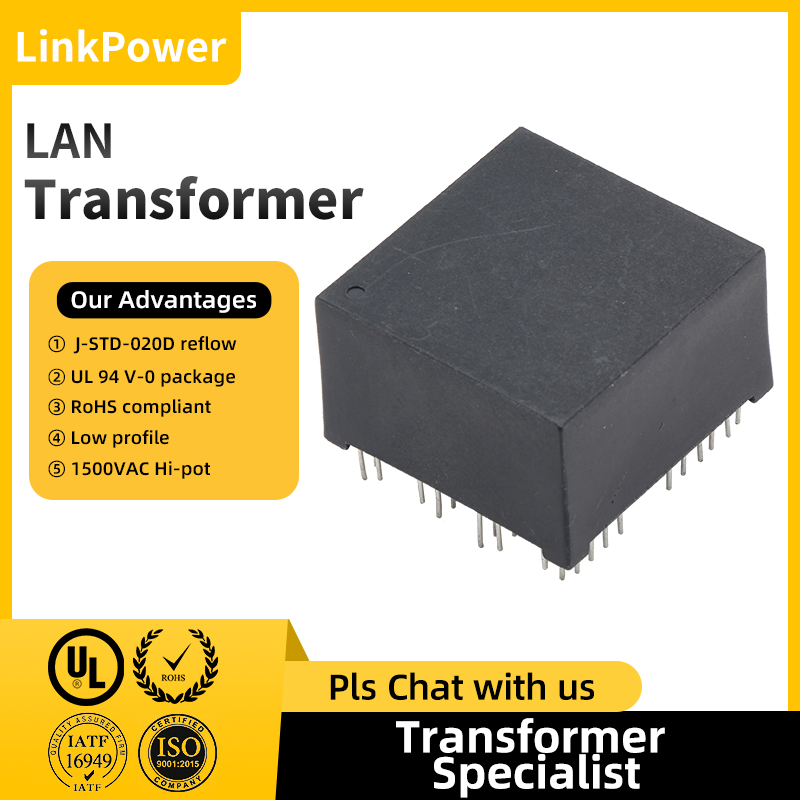
What is a 100/1000 Base-T Transformer?
100/1000 Base-T transformers are a component of Ethernet hardware designed to support Fast Ethernet (100 Mbps) and Gigabit Ethernet (1000 Mbps) speeds. These transformers are used to isolate and connect Ethernet transceivers to the physical network, ensuring signal integrity and compliance with international standards.
Advances in Transformer Technology
Recent advances in 100/1000 Base-T transformer technology have focused on the following key areas:
Miniaturisation: As devices become smaller and more compact, transformers are shrinking in size without compromising performance. This trend is critical for modern network equipment where space is at a premium.
Power Efficiency: New designs aim to reduce power consumption, an important factor in environmental sustainability and cost savings. Low-power transformers help enable energy-efficient data centre and network infrastructures.
Enhanced Signal Integrity: Improvements in materials and design have increased signal integrity and reduced noise and crosstalk. This improvement is critical to maintaining high-speed data transmission over longer distances.
Integration and compatibility: Modern transformers are being developed to support multiple Ethernet standards and are increasingly integrated with other components to simplify design and deployment.
Market Impact and Trends
The 100/1000 Base-T transformer market is experiencing strong growth, driven by several factors:
Proliferation of IoT Devices: The Internet of Things (IoT) boom has led to an exponential growth in connected devices, all of which require reliable Ethernet connectivity. 100/1000 Base-T transformers are critical to providing these connections, especially in industrial and commercial applications.
Data Centre Expansion: As cloud computing and big data analytics grow, so does the need for efficient data centres. Transformers supporting Gigabit Ethernet are critical for the high-speed connectivity needed in these environments.
5G and Edge Computing: The introduction of 5G networks and the rise of edge computing require advanced networking solutions. Transformers that can handle high data rates and deliver robust performance are key components of these ecosystems.
Consumer Demand: Increase in smart home devices and high bandwidth applications such as streaming media and gaming is driving the demand for better home networking solutions, further fuelling the transformer market.
Future Outlook
The future outlook for 100/1000 Base-T transformers is promising, with current R&D focused on further improving performance and efficiency. Innovations in material science and manufacturing processes are expected to lead to smaller and more efficient transformers. In addition, with the global push towards sustainable technologies, we can expect to see more environmentally friendly design and production methods.
In summary, 100/1000 Base-T transformers are not just components, but key enablers of next-generation network technologies. Their role in supporting the growing demand for faster, more reliable and energy-efficient Ethernet connections ensures that they will be at the forefront of the networking industry for years to come.
LP5007NL Transformers: Shaping the Future of Networking Solutions
City Car Transformer: Pioneering Urban Mobility through Advanced Transformer Technology
Related Article
In the design field of high - frequency transformers and inductors, the introduction of an air gap in the magnetic core is a crucial yet delicate technique that requires careful trade - offs. The presence of an air gap not only significantly impacts magnetic properties but also has close relations with thermal stability and efficiency.
Air - Gap Design in High - Frequency Transformers: Trade - offs among Magnetic, Thermal, and Efficiency Aspects